What Happens If It Rains on Your Tuscany Wedding Day?
Short answer: nothing has to go wrong. Rain on a wedding day feels like a crisis when you’re planning from home, months out, staring at a long-range forecast that’s wrong half the time anyway. In practice, a Tuscany wedding with a real backup plan barely skips a beat when a storm rolls through. It just moves indoors, and often looks even more romantic for it.
I’ve photographed enough Tuscany weddings across every month of the season to know which worries are worth your energy and which aren’t. Rain is one of the ones I’d stop worrying about, as long as your venue actually has a plan, not just a vague promise that “we’ll figure it out.”
Why This Worry Is Bigger Than It Needs to Be
Tuscan summers are mostly dry, and if you’re marrying June through September, rain is usually a short, fast-moving afternoon storm, heavy for twenty or thirty minutes, then gone, with clear skies often returning before dinner. Spring and autumn are a different story. From October onward especially, rain becomes noticeably more likely, and it tends to be the gentler, longer kind rather than a quick summer burst. If your date falls anywhere in that window, treat a real Plan B as essential, not a footnote. Honestly, I’d say build one in no matter the month. The venues that handle rain best are the ones that never treated it as an edge case to begin with.
What a Real Backup Plan Actually Looks Like
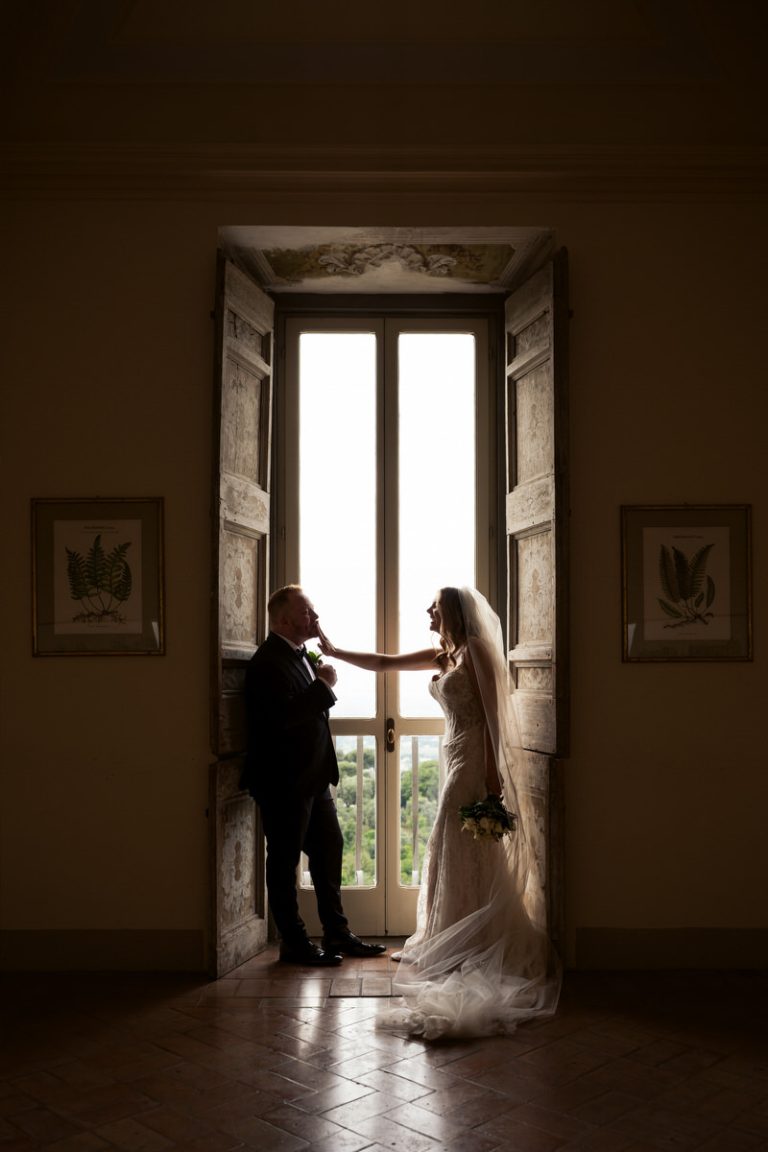
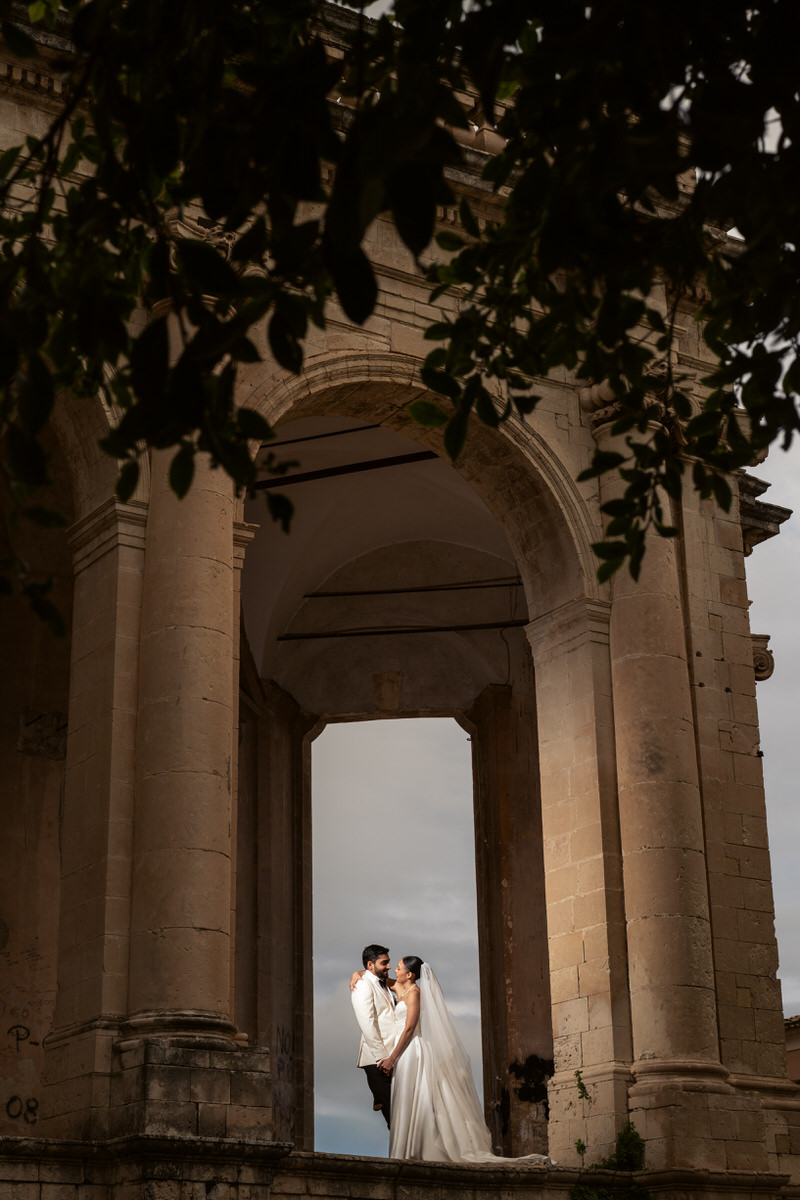
A real plan means your full guest count fits comfortably indoors or under permanent cover, not a flimsy pop-up tent nobody has tested in wind. Historic properties tend to handle this best, since many were built with loggias, covered courtyards, and grand interior halls long before anyone worried about wedding logistics. Venues around Lucca often have covered arcades and villa interiors that convert a ceremony from lawn to loggia in minutes without losing the atmosphere. In Florence, grand palazzo interiors with frescoed ceilings and tall windows can make a rained-out ceremony feel like it was the plan all along.
The best venues build this in from the start: a loggia, a covered courtyard, or an indoor hall that’s already part of the property, not a tent ordered in a panic the week before. How and when that call actually gets made usually comes down to your wedding planner. Some wait until the very last possible moment, hoping the forecast improves; others check the forecast days out and simply commit early. “We’re not gambling on this, we’re moving to Plan B.” That tends to make for a much calmer day for everyone involved. Sometimes Plan B is a proper tent rather than an existing indoor space, and that’s fine too, as long as it’s actually been tested for a wedding before, not just assembled and hoped for.
What Changes for Photography When It Rains
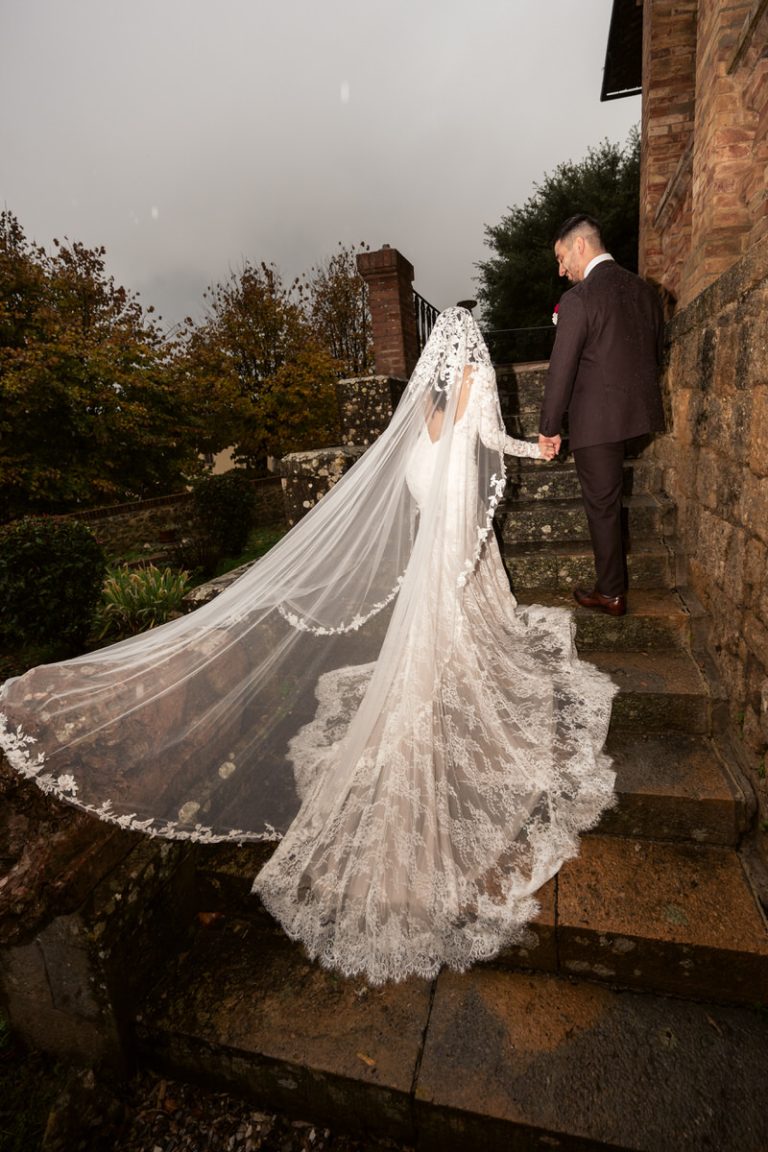
For photography specifically, rain is honestly one of the easier problems to solve. Overcast skies are a gift for portraits: soft, even light with no harsh shadows across faces, which is exactly what photographers chase with diffusers on sunny days. Villas and historic venues across Tuscany almost always have a beautiful interior room or covered arcade nearby, so moving indoors rarely means losing the atmosphere. And rain rarely falls all day without a break. A five- or ten-minute lull between showers is often enough for a proper portrait session outside, which is exactly why it’s worth building a little slack into your timeline. A schedule with zero buffer leaves no room to catch that window when it opens up. Rain itself also opens up shots most couples never plan for: reflections in wet stone piazzas, a shared umbrella walk between courses, steam rising off a coffee at the reception.
What to Ask Your Venue Before You Book
- Does the indoor or covered space hold your full guest count, or only a portion?
- Who decides when to switch to the backup plan, and how late can that decision be made?
- Is there an extra cost for tenting, heating, or additional staff if the plan changes?
- Has the backup space actually hosted a wedding before, or is it untested?
Quick Answers
Does it rain often during Tuscany wedding season?
Summers (June–September) are mostly dry, with occasional short, fast-moving afternoon storms. Spring and autumn carry meaningfully more risk, and from October onward a solid backup plan should be treated as essential, not optional.
What’s a realistic wedding rain backup plan?
An indoor or permanently covered space, tested for weddings, that comfortably fits your entire guest list, ideally built into the venue itself rather than a makeshift tent as an afterthought.
Will rain ruin my wedding photos?
Not at all. If anything, rain weddings often feel more special. It holds people closer together and creates a different kind of energy; guests tend to be more present and engaged rather than drained by the heat of a harsh, sunny afternoon. A lot of what people picture as “ruined” is really just fear of the unfamiliar. That said, it does depend on your photographer: someone comfortable and creative in the rain will make the most of it, while someone who isn’t may treat it as a problem instead of an opportunity.
How last-minute can the decision to move indoors be?
This depends entirely on your venue and vendors. Ask specifically how many hours of notice they need, and get the answer in writing.
The couples who worry least about weather on their wedding day are the ones who asked these questions months in advance, then genuinely let it go. If you want a second opinion on whether your venue’s backup plan actually holds up, I’m happy to take a look.